There are several different styles of skateboarding, in this two-part blog series I would like to give you an overview about what the five main disciplines entail and provide a very brief history of their evolution.
Part 2.
Park
As street skateboarding became more prevalent many communities wanted to provide an area for skateboarders, to encourage them off public streets while allowing them to practice their hobby. Concrete parks were built that had features which skateboarders enjoyed riding. Curved walls which emulated the feeling of riding a wave, large banks for performing spins and flip tricks on, and eventually rails and boxes to slide and grind on. These skateparks provided ideal terrain and allowed the difficulty of the sport to increase enormously. Modern park skateboarding is very similar to competition street skateboarding, with more focus on transitional skateboarding (ramps) than the latter. Park skateboarding will be featured in the next Olympic Games, check out the USA Skateboarding Team page to see their training facilities and team.
Pool
At the same time skateboard park designs were improving, skateboarders were noticing the similarities between the park transitions they loved riding and the curvature of an empty swimming pool. Empty pools throughout California were hunted down and ridden. This new style of skateboarding that emerged lacked the technical elements of freestyle or street but had the raw speed and aggression of surfing, it involved pumping the corners of the pool and doing turns as high as possible on the walls. Pool skateboarding became very popular and set the stage for the evolution of vert ramps.
Ramp
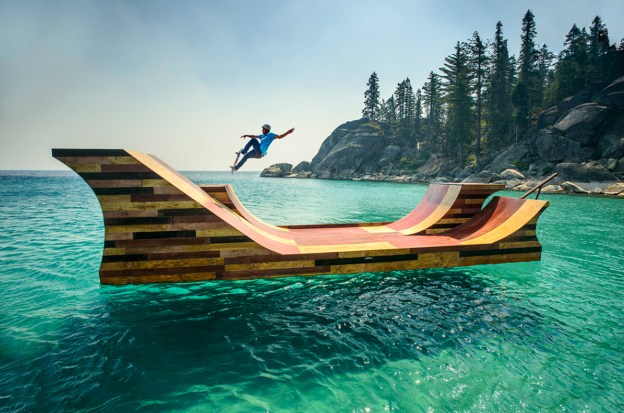
Incorporating what they had learned from riding pools, skateboarders began building ramps with a large transition, flat bottom and metal coping designed to imitate the bullnose coping of a swimming pool. These were usually constructed from plywood which allowed enough flex to create a curve. These ramps allowed skateboarders to perform far more difficult and complicated tricks than were previously possible and the popularity of the sport exploded. Flip tricks from street and the aggressive style of pool created the new genre of ramp skating. The 1980’s saw vert (large ramps with a vertical incline) become mainstream, with icons such as Tony Hawk receiving lucrative sponsorship deals from big companies. Unfortunately, vert skateboarding became increasingly unpopular towards the 90’s as most skateboarders gravitated towards the easier and more accessible discipline of street skateboarding. While it is a style of skateboarding that is still practiced, the limited availability of vert ramps restricts its growth. Mini ramps, which are a smaller version of a vert ramp have become very common due to their ease of build and affordability, many skateboarders have a version of one at their local park or even home. Vert also spawned the birth of Mega Ramp skateboarding, a very niche sport in which skateboarders ride ramps upward of 70 feet high.
 Cakealicious Cakes